CONSERVATION at work

Our projects

The following projects are all based around creating life and employment opportunities for the local communities. The reality of the situation is that with a 12-room lodge, it will not be possible to feed 6,000 people and therefore it is imperative to create other projects that will improve the livelihood and economy of our local community.


It is also important for conservation and sustainability that we do not just stop poaching and charcoal burning within the conservancy with a strong hand and rule of law, when in effect it was the only real income for some of the local community. On one hand it is good to stop all illegal activity but on the other hand it will be much more sustainable if we can provide alternative forms of income for the same people.

Food for community

In the heart of Kenya, the Tsavo region is home to a diverse community that relies on sustainable and reliable food supplies to thrive. As we continue to face challenges such as climate change, population growth, and economic fluctuations, it is essential to prioritize the availability and accessibility of nutritious food for everyone in Tsavo. When things get really bad and the drought bites, SAWCT with the help of community elders and priests make a list of the neediest families and then carry out a food drive to help them. Friends and family came together and donated either money or in kind to the Trust in a food drive, this initiative aimed to provide essential nourishment to families facing hardship. In total we regularly feed approximately 500 families. One hamper consisted of 4 packets of maize flour 1 packet of wheat flour 2 kgs sugar 2 kgs lentils 3 kgs rice 3 kgs red beans 1 liter cooking oil 500 gms tea leaves 500 gms salt 500 gms stock cubes 500 gms soap 1 liter drinking water In addition to this, every 2 weeks there a few selected families receive some ration which includes fruit and vegetables, milk and some dry goods as they have no means to make ends meet. Every donation, no matter how small, makes a significant difference in the lives of our neighbors. Together, we can build a brighter, more resilient Tsavo, where everyone has access to the nourishment they need to thrive. Join us in this vital mission and help make a positive impact on the lives of our fellow community members. Together, we can make a difference.

Security for Wildlife

SAWCT manage and operate three conservancies. These areas have very different challenges, but need to be protected either way. SAWCT have their own rangers, anti-poaching teams, fence crews and community liaison officers where needed. These are an amazing group of people who operate without fear in some of the harshest environments, against the scourge of […]

Water for wildlife

Water is essential for Kenya’s diverse wildlife, from elephants and lions to birds and smaller species. However, climate change, deforestation, and human activity have led to water shortages and dried up waterholes, threatening both animals and their habitats. Conservation efforts, such as building water pans, protecting wetlands, and promoting sustainable water use, are crucial to ensuring wildlife survival. By supporting these initiatives, we can help maintain Kenya’s rich biodiversity and safeguard its iconic species for future generations. In tsavo for example we refill waterholes on a daily basis, twice a day in order to keep the wildlife happy and healthy but also to stop elephants wandering through community land and farms in search of water, which is a recipe for disaster in human wildlife conflict. In 2024 we delivered 6,423,500 million liters of water for the wildlife.

Water for Community

Access to clean water is vital for communities in Kenya, supporting health, agriculture, and livelihoods. However, many areas face water shortages due to droughts, pollution, and inadequate infrastructure. Investing in sustainable water solutions, such as boreholes, rainwater harvesting, strategically placed water tanks and conservation efforts, is dramatically improving lives and boosting development. Ensuring safe and […]

Bursary Projects

In Kenya primary school education is compulsory and “theoretically” free. Secondary education on the other hand is relatively expensive and not compulsory. This unfortunately leaves a cross section of very bright students with exceptional grades but no opportunity to go any further in their education. At SAWCT we work closely with the primary school headmasters, the chiefs, the village elders and the priest to carefully handpick individual children from the very poorest families in our community but with the highest grades. We do a home visit to each of these families and respectfully request the family and communities blessing to take these kids further, of which we have never been turned down but rather received with great joy and open arms. When we take such a child, we cover all their costs from uniforms to bedding, etc. as well of course school fees (all but a few attend boarding school). The trust currently has 88 children in secondary education and 9 in universities and a number in vocational training.

Boda-Boda Project

In Kenya, especially in the rural areas, the informal transport sector has been taken over by cheap motorcycles that help transport villagers to market, hospital, schools etc. These have become known as “boda bodas”. The Trust has so far taken 5 young men from the community around Tsavo and so far one from the Mara, these young men are selected from the poorest families in the community and sent them for driving lessons and eventually bought them a boda boda each for them to start their own micro-business. The principle of this, is that we have some really bright young men who aren’t great at academics but are great at other things. All these young men pay back to the Trust Kshs 200.00 ($1.54) per day until they have refunded the trust the full amount for the purchase of the boda-boda. All of these monies are kept in a kitty and each time it reaches an amount of a new motorcycle, another member of the community is selected to benefit from this project. This project has proved to be a great success, and not only helps with their livelihoods but also assists with the community in providing transport services where there are none.

Community Tailoring Project

So far we have taken 6 ladies from the local communities around the lodges, who again are not great with their academics but for more practical (2 from Tana River Delta, 2 from Tsavo and 2 from Masai Mara). We start by taking the ladies to tailoring school anywhere from 1.5 years to 2 years (depending on how quickly they pick up). After graduation they spend some time with Nikita learning the basics of business eg cash flow, profit, stock, tax etc. At this stage we buy them special sewing machines from India (manual pedal operated due to no electricity). Thereafter, they set up their own micro-business making clothes and other items within the community. These businesses are also supported by the lodges with making cushion covers, uniforms etc.

Beekeeping Project

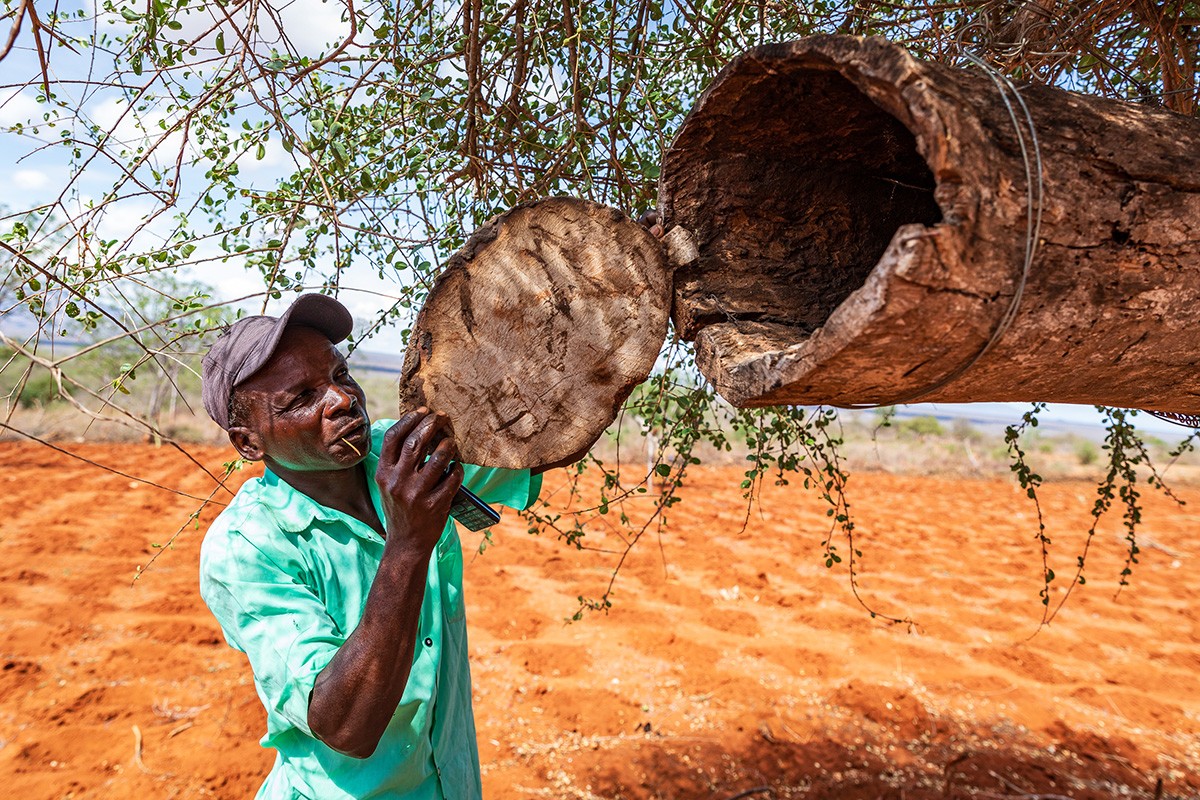
Not every poacher is a criminal. Some of them simply want to feed their families, pay bills and send their children to school. Hence, they look at small petty poaching like bush meat e.g. dik dik, impalas. When our anti-poaching team catch them, they are sat down and given a square meal and given an […]